10 min read
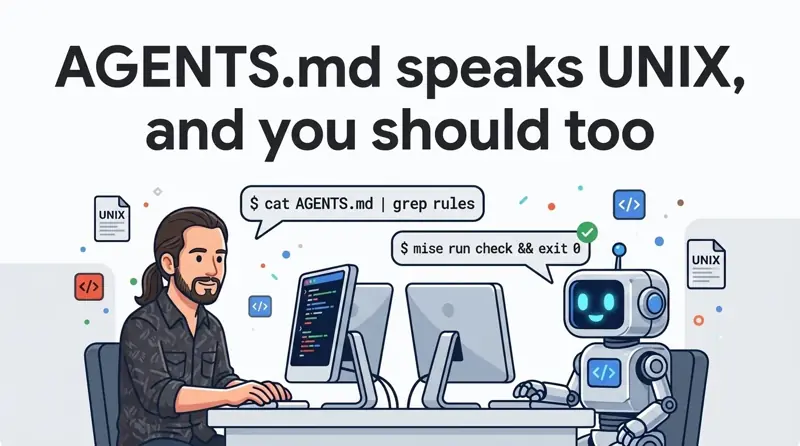
AGENTS.md speaks UNIX, and you should too
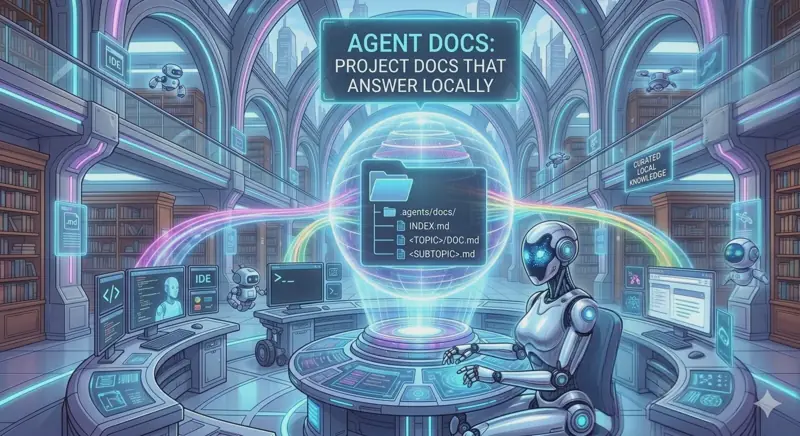
Unix gives coding agents the tools. AGENTS.md explains where to edit, how to check, and what to preserve. Lessons from my dotfiles and human review.
- Agent
- Coding
- Project
With your consent, Google Analytics measures which pages help visitors so I can improve them.
Nothing loads before you accept, and you can change your choice from the footer at any time. Privacy
Writing
Pragmatic field notes on AI agents, MLOps, cloud architecture, and engineering systems.
Get new articles in your feed reader. Copy the RSS link into your reader to subscribe.
Unix gives coding agents the tools. AGENTS.md explains where to edit, how to check, and what to preserve. Lessons from my dotfiles and human review.
Comparing LiteLLM and agentgateway for enterprise AI platforms: licensing boundaries, security advisories, ops footprints, and open governance.
AI coding agents amplify repository friction. How we redesigned an MLOps codebase around deterministic single-command gates, SQLite isolation, and AGENTS.md.
Running a remote Model Context Protocol (MCP) server behind multiple instances presents immediate infrastructure challenges.
Engineering organizations are waking up to a sobering financial reality: the cost of running AI systems scales linearly, not logarithmically.
Agent-evolutions is a set of Agent Skills that turns a coding agent into a budgeted genetic search over a design space, with verifiable scoring at every step.
A coding agent is only as useful as the spec you give it. That sentence sounds like a truism until you watch it play out for an afternoon.
Pair-program with a coding agent for an afternoon and you start noticing a quiet, recurring tax.
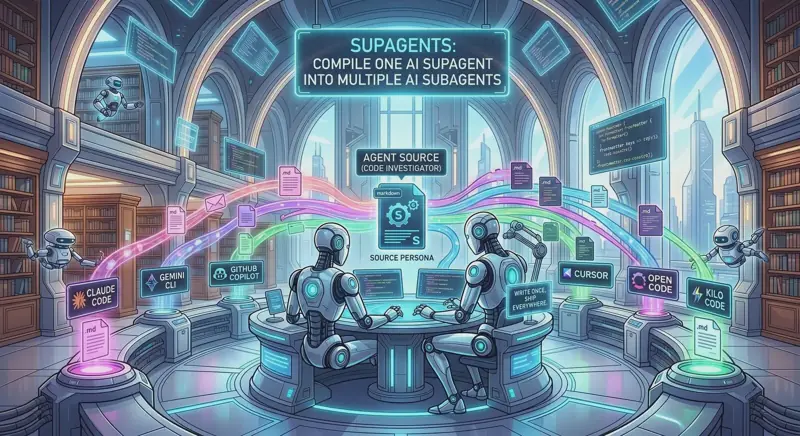
Supagents compiles one Markdown persona per subagent into the native formats of Claude Code, Gemini CLI, GitHub Copilot, Cursor, OpenCode, and Kilo Code.
We are building the most advanced AI systems in history, yet the best way to control them relies on paradigms from the 1970s.
AI Coding — or Spec-Driven Development — is a recent trend that amazes as much as it scares IT engineers.
How I revamped my portfolio website, fmind.dev, in five nights using AI agents: preparing the agent, steering it, the result, and my key takeaways.
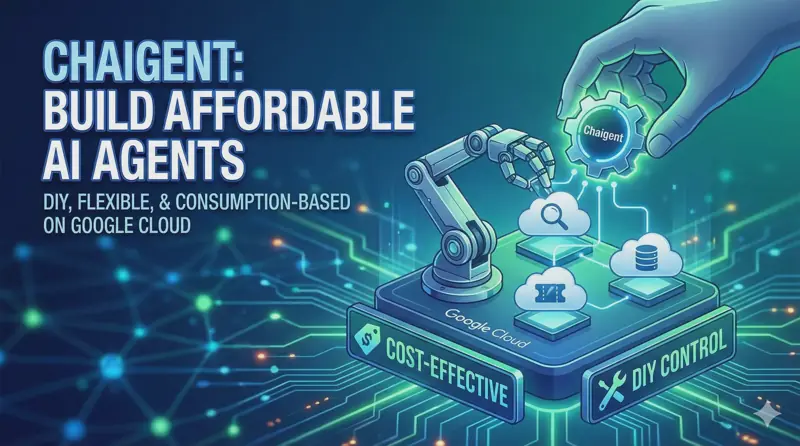
Build a cost-effective, private AI Agent solution on Google Cloud using Chainlit and Vertex AI. Detailed architecture and code guide.
Build a personal AI assistant using Google Cloud Run, Vertex AI, and Google Chat. A guide to architecting context-aware agents.
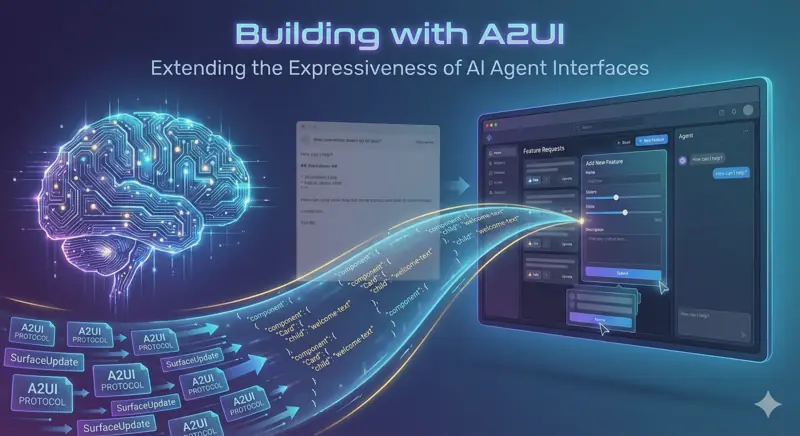
Building AI-First apps with A2UI: from the Agent-View-Controller (AVC) pattern to managing latency. A practical case study with Featest.
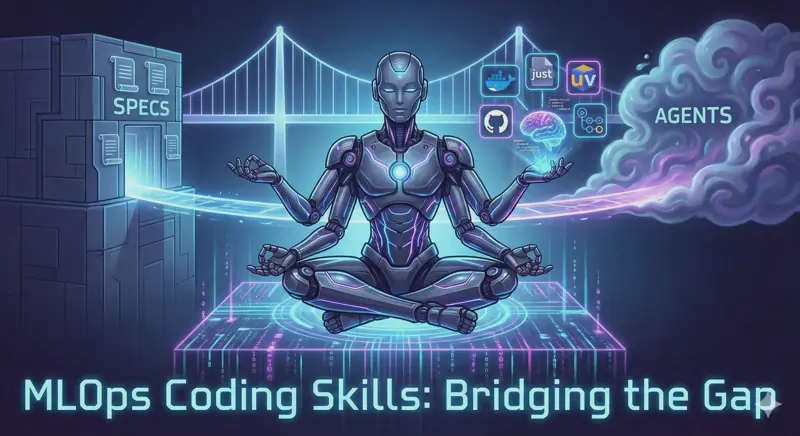
Bridge the gap between engineering specs and AI agents using Agent Skills. Learn to inject ‘Senior Engineer’ context for production MLOps.
Discover how A2UI solves the AI Agent UI bottleneck. A deep dive into replacing chatbots with agents that project their own native UIs.
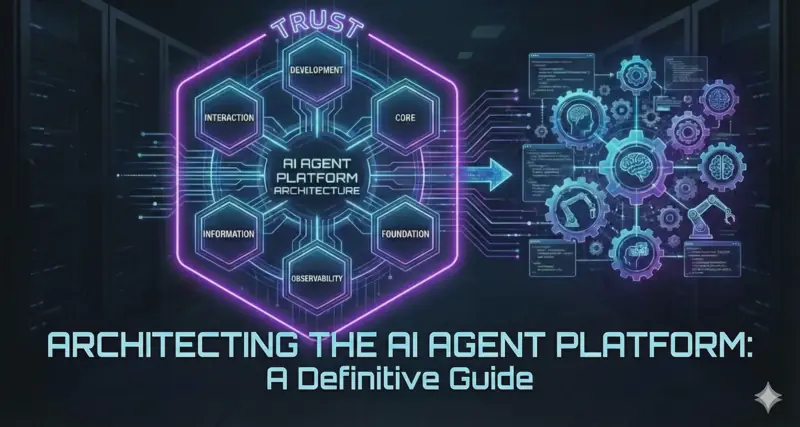
AI agent platform architecture in 7 layers, from interaction and development to observability and trust: how to serve, secure, and monitor enterprise agents.
Power up your AI agent in production. Learn to deploy a secure ‘Slides Translator’ using ADK, OAuth, and Gemini Enterprise.
For AI agents, the biggest challenge isn’t the model, it’s the UI. A deep dive into the user interface bottleneck for enterprise AI.
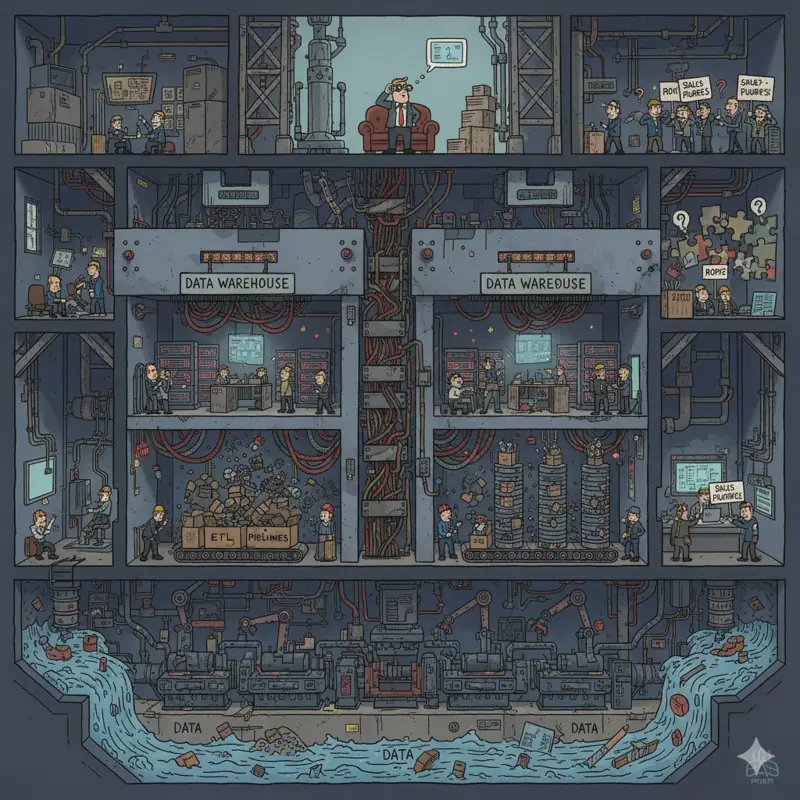
For decades, the story of data platforms has been one of centralization and heavy engineering.
Speed up AI agent development on GCP with Ackgent. Build, deploy, and iterate faster using Google ADK and Agent Config's declarative approach.
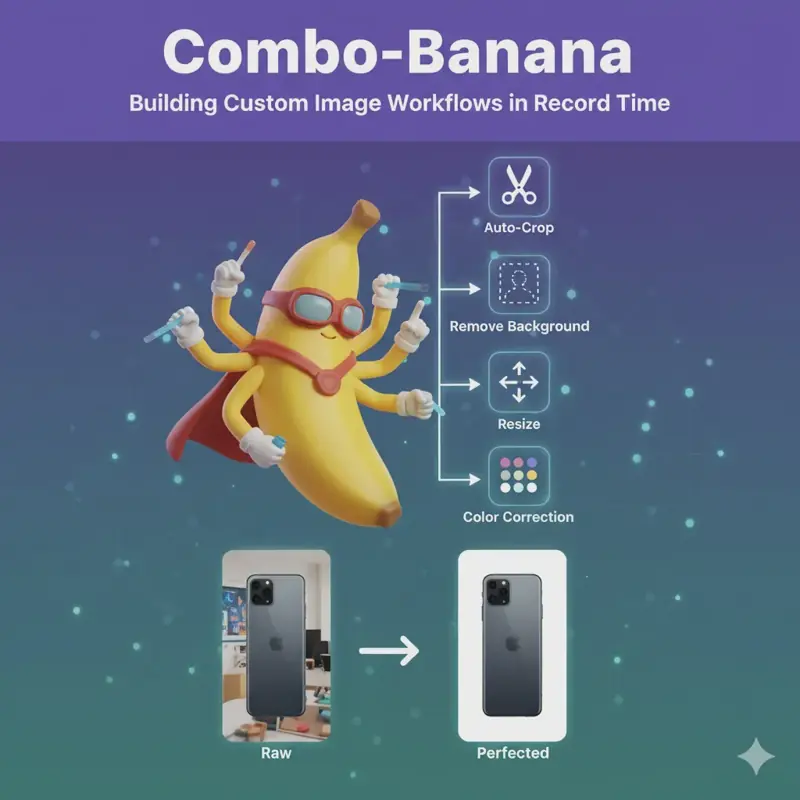
Build custom AI image workflows fast with Combo-Banana. Empower designers to automate tedious editing tasks with Google Nano-Banana.
I launched the first video series of my MLOps Coding Course, covering the introduction and the entire first chapter, made with NotebookLM in under 48 hours.
Learn to deploy AI agents in the enterprise using ADK & Google Cloud. We compare Cloud Run & Vertex AI for secure, scalable AgentOps.
A father tests Gemini AI’s coding skills to create a magical birthday for his 6-year-old. See the staggering results from Deep Think!
It is a classic tale of corporate life. A colleague of mine at Decathlon had a mammoth task: translate a 155-slide presentation into several languages.
A guide to creating conversational AI with Gemini. Generate custom educational audio with multiple voices using a simple Python script.
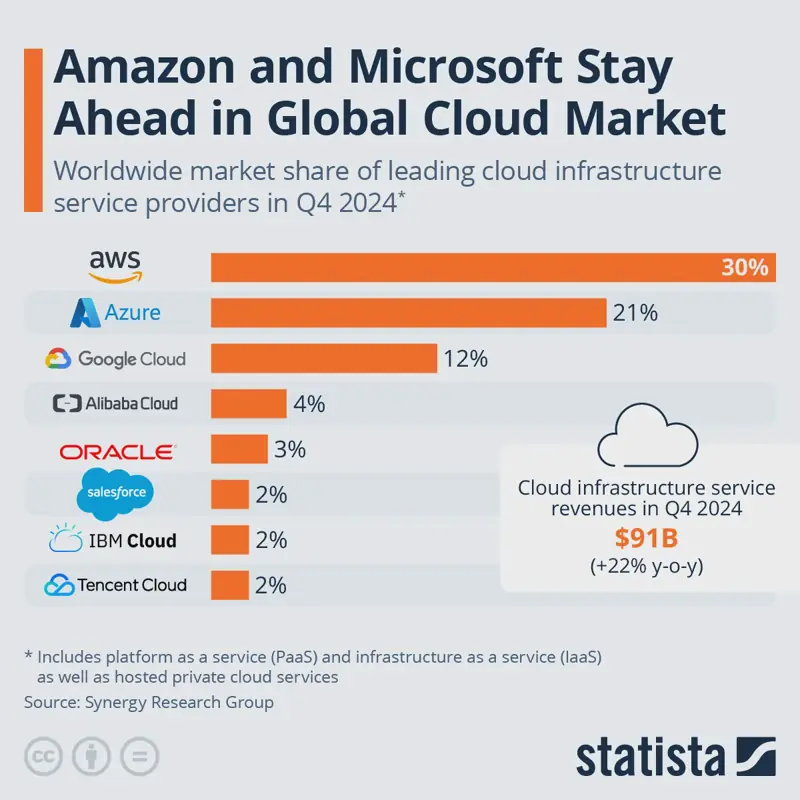
Agentic Cloud: Disrupting cloud giants with AI. Learn how intelligent agents will commoditize hyperscalers & reshape infrastructure.
Navigate the challenges of scaling LLMs on GCP and get benchmark insights for cost-effective, reliable, and quick LLM serving.
Explore the shift from slow data pipelines to real-time API management for building Gen AI systems and modern enterprise data architecture.
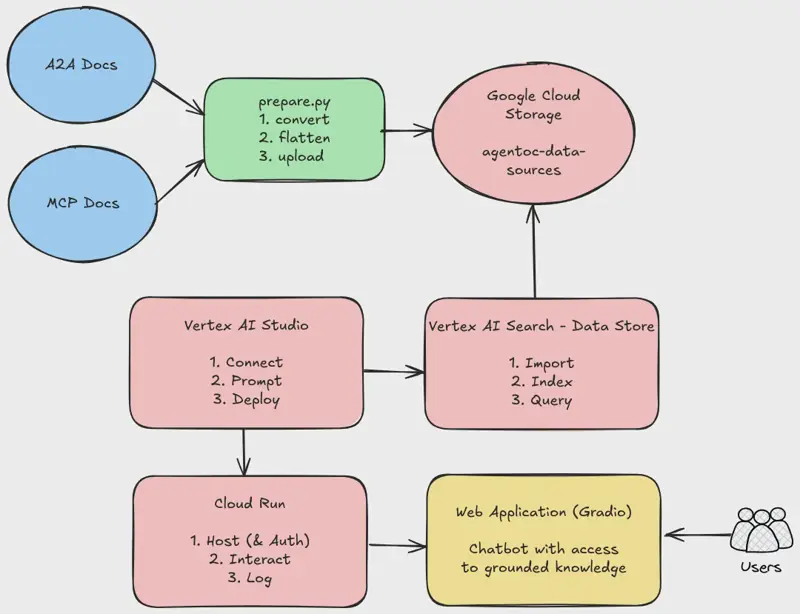
Build & deploy a RAG app in minutes! Use Vertex AI Studio & Vertex AI Search for a rapid hackathon win. Ground LLMs with your data.
How I built GentWriter with Google's ADK: a multi-agent system that turns one article URL into an SEO description, an X post, and a LinkedIn post.
CAG vs RAG for Generative AI: Compare latency, cost & complexity. Choose the best LLM context strategy for your app.
As developers and AI practitioners, many of us belong to vibrant online communities, like the MLOps Community on Slack.
A Python notebook agent that reviews GitHub repositories against your own guidelines automatically, using Google Colab, the GitHub API, and Gemini models.
Video meetings on platforms like Google Meet are essential for collaboration, but how often do crucial details get lost moments after the call ends?
Team collaboration often lives and breathes within chat applications like Google Chat or Slack.
Building AI applications is incredibly exciting. But let’s be honest: getting started can be challenging, especially in large organizations.
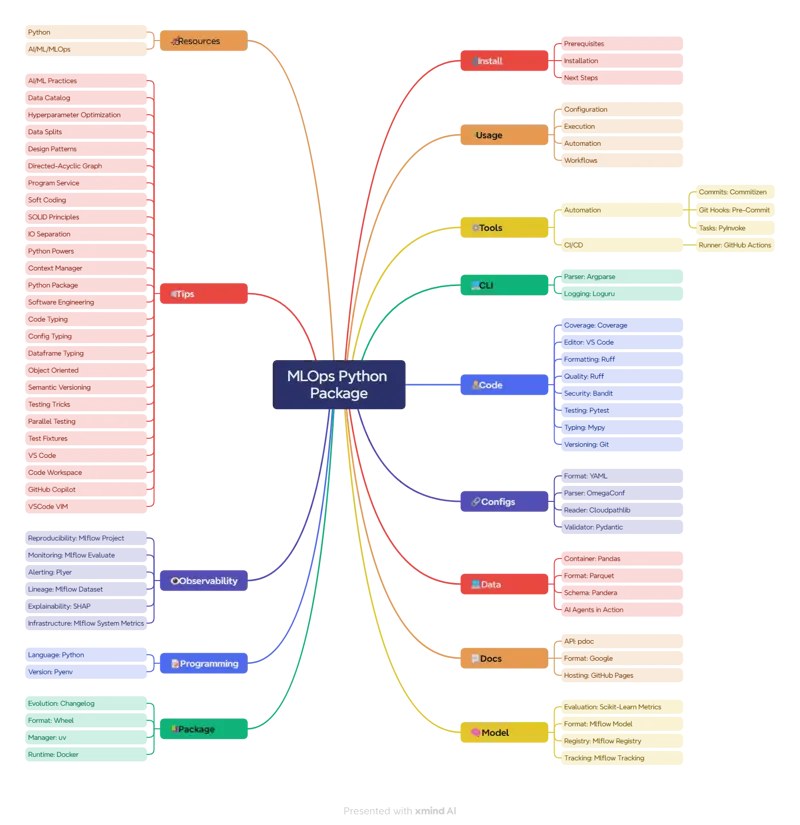
The MLOps Python Package is your go-to solution for building robust and reproducible AI/ML workflows. Check out the latest v4.1.0 release!
Meet Kate: an AI-powered, live, multimodal website assistant. She uses voice, understands your needs, and retrieves info from a website.
Explored Gemini’s long context in a Kaggle competition. Key lessons learned about its potential and limitations.
MLOps pipelines are often too rigid. We propose using reusable artifacts orchestrated by DAGs. Think functional programming for ML!
Poetry vs uv from a real migration: how I moved the MLOps Python Package to uv, with the pyproject.toml, CI, and Docker changes, and why builds got faster.
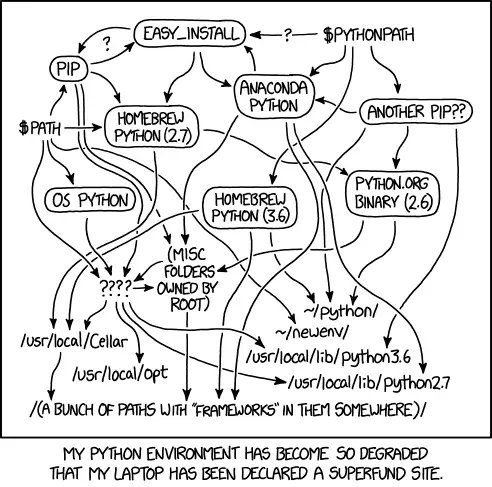
Tame your Python chaos! Learn how pyenv simplifies managing Python versions for AI/ML & MLOps, ensuring smooth, reproducible development.
The AI landscape is constantly evolving, pushing the boundaries of what’s possible with technology.
The Cookiecutter MLOps Package offers a powerful code template to jumpstart your MLOps journey and accelerate your AI/ML development.
This article dives deep into the essential tools and practices for achieving comprehensive observability in your AI/ML projects.
The MLOps Coding Course is an open-source resource specifically designed to bridge the gap between data science and software engineering.
A method to build robust yet flexible MLOps code bases with Python's ABC and Pydantic, grounded in design patterns and the SOLID principles.
The MLOps ecosystem is evolving into a sophisticated symphony, composed of diverse tools, methodologies, and cultures.
In this article, I will outline the steps for configuring VS Code for data scientists and machine learning engineers.
How I built a chatbot that answers questions about my resume with the OpenAI API, Chroma DB, HuggingFace Spaces, and Gradio, and what I learned along the way.
Programmers have always been passionate about their preferences, whether they discuss spaces vs. tabs, Vim vs. Emacs, or light mode vs. dark mode.
While the future of machine learning and MLOps is being debated, practitioners still need to attend to their machine learning models in production.
MLOps practitioners (rightfully) point out that running notebooks in production is a bad software practice, but what are the alternatives?
How I used the ChatGPT API to standardize the open-ended answers of the MLOps Community survey on LLMs in production, and the lessons I learned.
There is an ever-growing landscape of tools and solutions for MLOps. In this article, I propose a solution to address this challenge.
Kubeflow Pipelines (KFP) is a powerful platform for building machine learning pipelines at scale with Kubernetes.
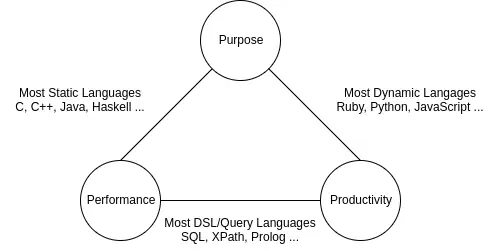
A fundamental trade-off that affects the design of programming languages and the success of software projects.