Framework, Template, or Example? 🤔 Choosing the Right AI Starter Kit for Your Team ✨
Building AI applications is incredibly exciting. But let’s be honest: getting started can be challenging, especially in large…
Building AI applications is incredibly exciting. But let’s be honest: getting started can be challenging, especially in large organizations. Setting up environments, structuring projects, writing boilerplate code, navigating CI/CD pipelines, figuring out which cloud account or service to use… all of this eats up precious time before you can ship your model in production.
This is where AI Starter Kits come to the rescue🦸♀️. They provide a launchpad, helping you ship AI applications faster and promoting best practices along the way. Broadly, they fall into three categories: Code Frameworks, Code Templates, and Code Examples. Picking the right one is crucial and depends heavily on your team’s needs, how cutting-edge your AI domain is, and how much flexibility you want.

Let’s dive in and unpack each one:
1. Code Frameworks: The Guided Path 🧭
Definition: Frameworks provide a set of code abstractions (often via a library 📚) that dictate how you structure and write significant parts of your application. They offer pre-built components and enforce a specific way of working, like abstractions for ML pipelines or data catalogs.
Pros:
- Strong Guidance: Enforces patterns and structure, keeping everyone on the same page.
- Laser Focus: Helps developers concentrate on the unique problem they’re solving, not reinventing the wheel for plumbing code.
- Consistency is Key: Ensures projects built with the framework share a common, understandable architecture.
Cons:
- Potential Rigidity: The abstractions might feel like a straitjacket if your use case doesn’t fit perfectly. Fighting a framework is never fun!
- Engineer Opinions: Let’s face it, developers have preferences. What one finds helpful, another might see as restrictive, potentially hurting adoption. I recall having endless debate about single-quote vs. double-quote …
- Heavy Upfront Lift: Defining really good, useful abstractions takes serious brainpower and foresight. There is a step learning curse in using framework.
When to Use: Best suited for domains where:
- Coding patterns are mature and accepted.
- The types of apps being built don’t vary wildly.
- Consistency across many projects is a top priority.
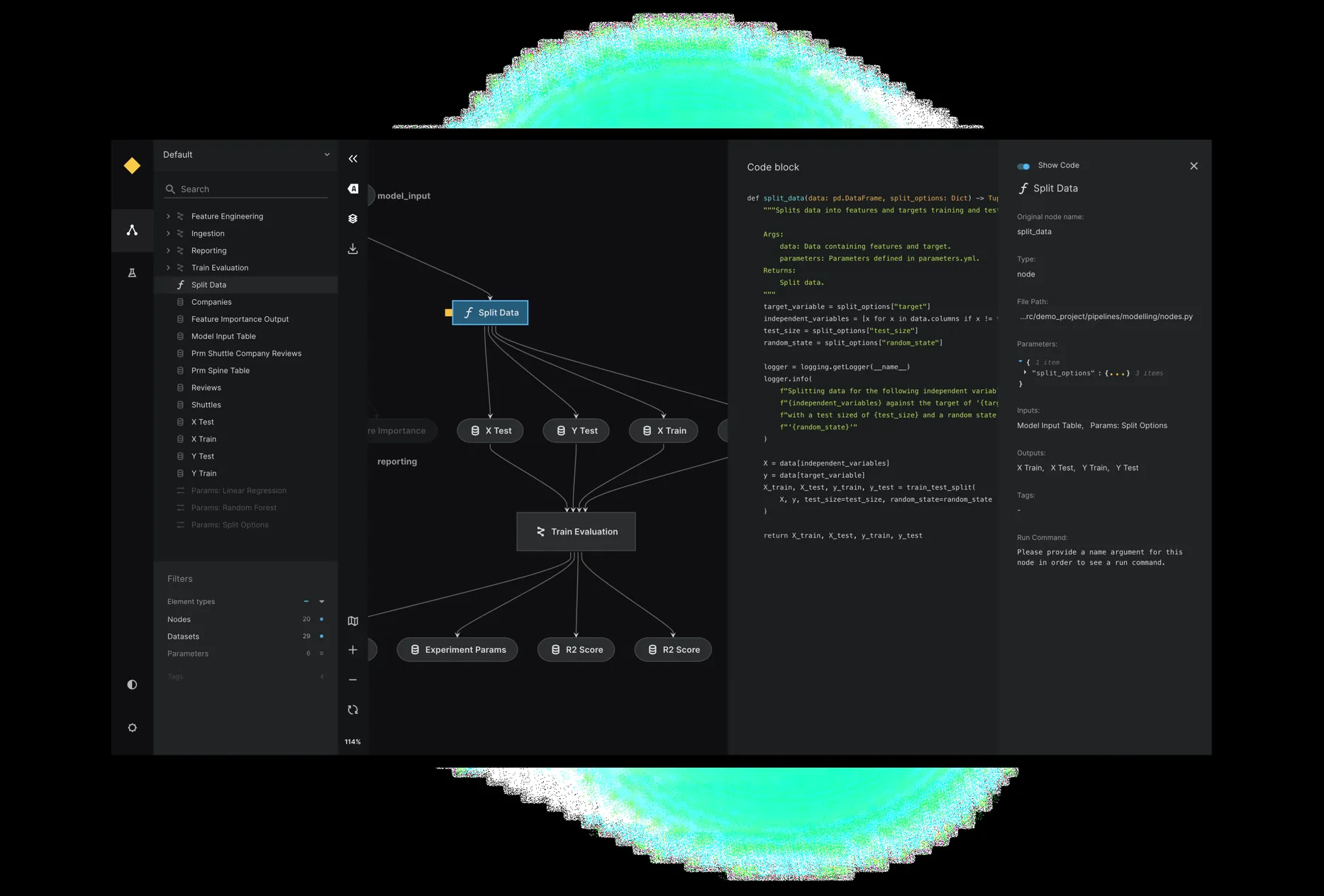
In the AI World: While web development enjoys mature frameworks like Django or React, the AI/ML landscape is… well, wilder! Frameworks like Kedro and ZenML offer powerful structures for pipelines and processes, but the sheer variety of ML tasks (forecasting vs. NLP vs. vision) and tech choices (MLflow vs. W&B, different clouds️) makes a one-size-fits-all framework tricky without boxing developers in.
Examples: Django (Web), Kedro (Data / ML), ZenML (MLOps).
2. Code Templates: The Structured Starting Point 🏗️
Definition: Templates are like code blueprints. They give you an initial project structure, config files, basic boilerplate, and setup scripts (e.g., CI/CD). They initialize your workspace, but don’t dictate your internal code style quite as strongly as frameworks.
Pros:
- Automated Setup: Creates a standardized project layout in seconds, often including DevOps and MLOps goodies.
- Customizable at Will: Often use tools like Cookiecutter or GitHub Templates, letting you personalize things (project name, author, configs) right at the start.
- Sweet Flexibility: Provides essential structure without strangling your core application logic (e.g., functions vs. objects, design patterns, …).
Cons:
- Maintenance Duty: templates need regular updates to keep pace with evolving tools, best practices, and cloud environments.
- One Size Fits Most: To be useful broadly, they might include things not strictly needed for every single project. You either put too much, or too little.
- Less Code Hand-Holding: Doesn’t enforce specific coding patterns inside your app modules like a framework does.
When to Use: Often hits the sweet spot when:
- Your code delivery process (CI/CD, packaging, deployment) is fairly standardized.
- You build diverse project types (forecasting, recsys, classification), making rigid code abstractions difficult.
- You want consistency in project structure and DevOps across different kinds of apps.
In the AI World: For many MLOps teams, templates are golden! They standardize how models get packaged, tested, deployed, and monitored, even if the ML models themselves are totally different. They’re great for navigating that tricky “company landscape” (which account? dev/staging/prod?️) without dictating exactly how you write your code.
Examples: cookiecutter-pypackage (Python), cookiecutter-flask (Web), cookiecutter-mlops-package (MLOps)
{
  "user": "fmind",
  "name": "MLOps Project",
  "repository": "{{cookiecutter.name.lower().replace(' ', '-')}}",
  "package": "{{cookiecutter.repository.replace('-', '_')}}",
  "license": "MIT",
  "version": "0.1.0",
  "description": "TODO",
  "python_version": "3.13",
  "mlflow_version": "2.20.3",
  "__prompts__": {
    "user": "GitHub User",
    "name": "Project Name",
    "repository": "GitHub Repository",
    "package": "Python Package",
    "license": "Project License",
    "version": "Project Version",
    "description": "Project Description",
    "python_version": "Python Version",
    "mlflow_version": "MLflow Version"
  }
}
3. Code Examples: The Concrete Illustration ✨
Definition: Exactly what it sounds like: a complete, working codebase solving one specific problem end-to-end. It’s a reference point, a “show, don’t just tell” approach.
Pros:
- Super Simple: Easiest type of starter kit to build and to maintain.
- Crystal Clear: Provides a tangible, easy-to-understand example of how to get something done.
- Lightning Fast: Quickest way to offer some guidance when developers tackle something new.
Cons:
- DIY Required️: Users have to manually copy, paste, and heavily adapt the code for their own needs. No setup automation here.
- Limited Mileage: Doesn’t offer much leverage beyond the specific use case shown.
- Less “Value Add”: Doesn’t enforce standards or automate setup like the framework and template.
When to Use: Your best bet when:
- You need to provide guidance fast for a brand-new or rapidly evolving area (hello, GenAI! 👋).
- Neither the core logic patterns nor the delivery methods are mature or standardized yet.
- The goal is inspiration and illustration (“Here’s one way to do it”) rather than strict enforcement or automation.
In the AI World: This often hits the nail on the head for cutting-edge domains like Generative AI. The field is moving at warp speed — new models (multimodal), new ways to interact (agents), tons of ways to deliver value (Slack, Teams, Web Apps, APIs…). Defining solid frameworks or even stable templates is like trying to map a river during a flood. Clear, working examples for specific tasks (e.g., building a RAG pipeline, fine-tuning model X, deploying an agent via API) offer immediate help without getting bogged down in standards that might be obsolete next month.
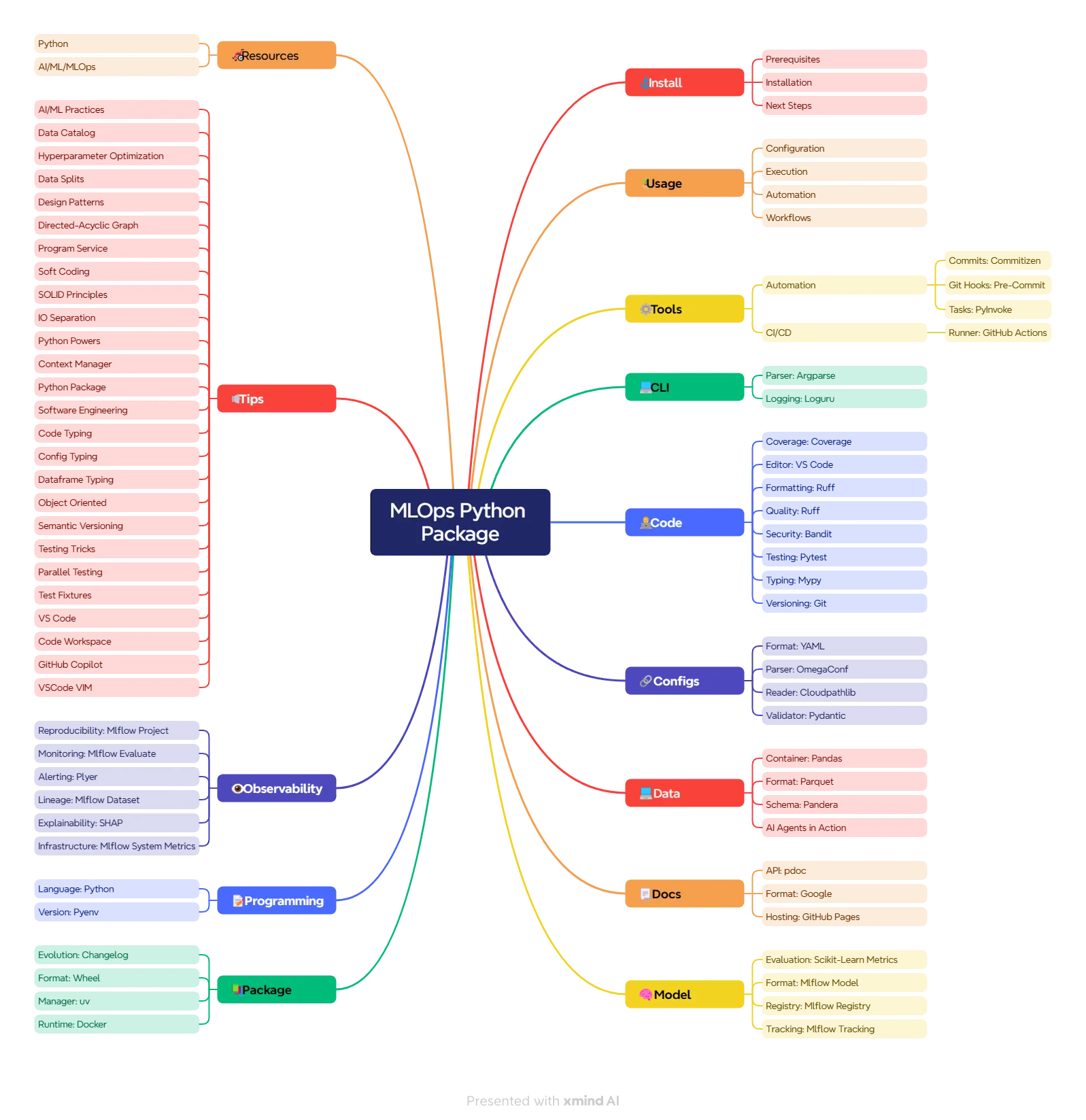
Examples: mlops-python-package (specific ML forecasting pipeline), repository of examples for building agent (agent-start-pack)
Making the Choice: Context is Everything! 🌍
So, which starter kit reigns supreme? Surprise! There’s no single winner. The right choice is a smart trade-off based on your specific situation:
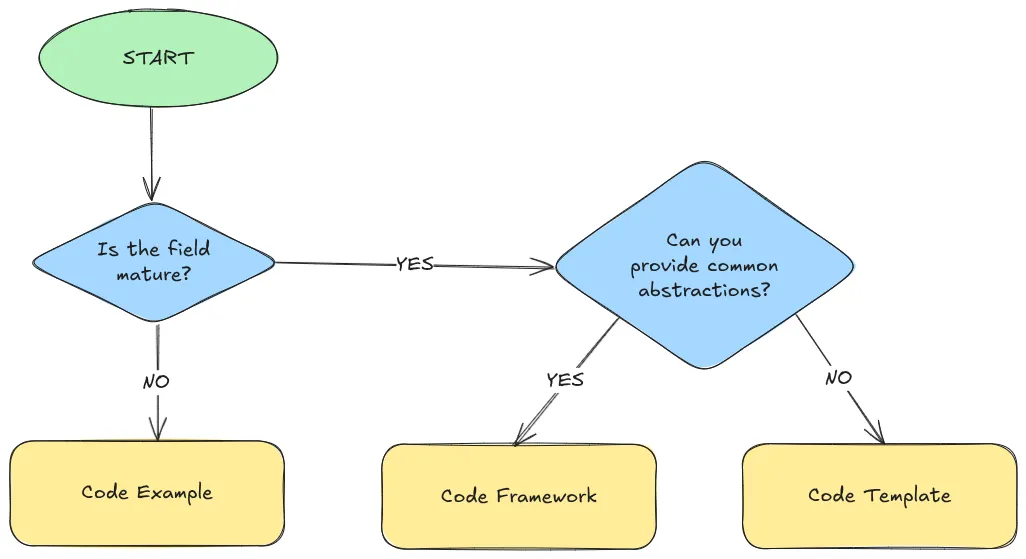
- Domain Maturity: How well-paved is the road in your field? (Web Dev: Mature -> Frameworks/Templates | MLOps️: Maturing -> Templates/Frameworks | Gen AI: Nascent -> Examples)
- Project Variety: Are you building mostly clones or special snowflakes? (Low Variety -> Frameworks | High Variety -> Templates/Examples)
- Team Needs & Vibes: Does the team needs detailed guidance, or just a nudge? Are they happy adapting examples, or do they expect automated setup?
- Org Standards: How consistent are your deployment, monitoring, and infra practices? (Standardized -> Templates rock | Less Standardized -> Examples might be easier to start)
- Speed vs. Scale: Examples get you moving fast initially but can lead to different paths. Frameworks ensure consistency but need upfront buy-in. Templates often strike a nice balance.
Ultimately, any starter kit’s mission is to empower your AI/ML engineers. They should help your teammates build up the next big innovation, not wrestling with repetitive setup tasks or getting lost trying to figure out the company’s cloud maze️. Talk to your teammates to ask what they prefer!
By thoughtfully weighing the pros and cons of frameworks, templates, and examples — and aligning your choice with the specific AI domain you’re in — you can provide the perfect level of support. Choose wisely, remove the friction, and watch your teams build amazing AI, faster than ever!